
The Melasma Treatment That WorksWith Your Skin, Not Against It

If you have ever had a chemical peel for pigmentation or melasma and spent the next week hiding from the world, red and peeling and wondering if it was worth it, you are not alone!
If you have treated a client that way, watched their skin clear, then watched the pigmentation come back darker six weeks later, you already know that aggressive is not the same as effective.
There is a better way. The science of how melasma and pigmentation actually work in the skin makes it very clear what that looks like, and it looks nothing like weeks of mandatory masking, strict compliance windows or the kind of downtime that sends clients home to wait out the damage.
Why Pigmentation Keeps Coming Back

Melasma and hyperpigmentation are not surface problems. They look like surface problems: flat, patchy, sitting right there on the cheeks, forehead and upper lip, but what drives them lives much deeper.
The cells responsible for producing pigment, called melanocytes, become chronically sensitised. In melasma specifically, oestrogen and progesterone bind directly to receptors on these cells and trigger a cascade that upregulates melanin production, enlarges the cell, accelerates pigment transfer to surrounding skin. Hormonal fluctuations from the pill, pregnancy, perimenopause, and HRT are among the most common triggers. Melasma affects men too, particularly with cumulative sun exposure and age-related hormonal shifts. This is not a condition that belongs to one gender or one skin tone.
Once this sensitisation is established, it does not simply switch off when the trigger is removed. UV light, heat and inflammation all feed the same loop. The melanocyte stays primed. The pigment keeps returning.
The Problem With Conventional Pigmentation Peels
Most pigmentation peels work by applying acids: glycolic, lactic, TCA, high-concentration combinations, at levels strong enough to force rapid exfoliation of the surface layers of the skin. The idea is that removing the pigmented cells removes the pigmentation. For some presentations of hyperpigmentation, this approach works reasonably well. For melasma and hormonally driven pigmentation, it creates a significant problem.

Downtime is unavoidable with aggressive acid peels. Seven to fourteen days of visible shedding, redness and sensitivity is standard. For clients who cannot take time away from work or daily life, this is a barrier to treatment. For clinic owners, it is a barrier to retention.
Aggressive peeling triggers the very mechanism that drives melasma. Inflammation activates the same biochemical pathway as UV exposure and hormones. When a sensitised melasma melanocyte receives an inflammatory signal, including the kind generated by aggressive acid exfoliation, it responds by producing more pigment. The surface clears temporarily. Then the rebound arrives, often darker and more widespread than before. This is not a client compliance issue. It is a predictable outcome of the wrong approach.
Complicated home care reduces results. Many intensive depigmenting systems, including mask-based protocols that require daily high-concentration application across weeks of mandatory compliance, rely on client diligence that most people cannot sustain in real life. Strict timing windows, significant sun avoidance and extended periods of daily actives sound manageable in a consult room. In practice, compliance drops and results suffer. For clients with medium to deep skin tones, prolonged use of certain agents at high concentrations also carries real sensitivity and safety risks, including the very post-inflammatory hyperpigmentation the treatment was meant to resolve.
Fitzpatrick III through VI skin is routinely excluded or undertreated. Aggressive peeling carries the highest post-inflammatory hyperpigmentation risk in exactly the skin tones most likely to present with hormonal melasma. A system that cannot safely serve the full Fitzpatrick spectrum is not a complete solution.
A Different Approach: Biomimetic, Not Aggressive
Larimedical is a Spanish-developed, bio-based cosmeceutical range built around a biomimetic philosophy. Where conventional peels force exfoliation through aggressive acid activity, Larimedical Biomimetic Peels work with the skin's own biology, modulating cell activity, supporting the skin's natural renewal processes, addressing pigmentation at its source without damaging the epidermis.
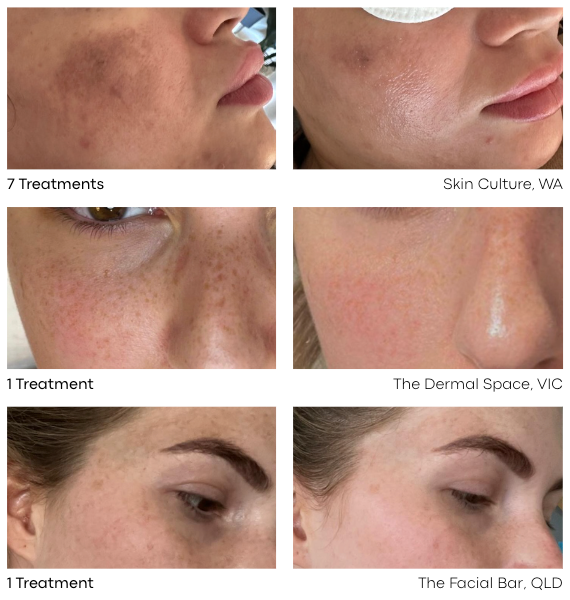
The result is no downtime and no visible shedding.
Not because the peels are weak. Because they are working differently. Instead of overwhelming the skin with acid concentration to strip layers, the Larimedical formulations deliver multi-pathway active combinations at calibrated levels that interrupt the pigmentation cascade, inhibit melanin production and block melanin transfer to the surface, all while keeping the skin barrier intact.
This matters enormously for melasma. No inflammation means no inflammatory trigger. No trigger means no rebound. The skin improves progressively rather than clearing and relapsing.

The Larimedical System
Larimedical works as a complete system across three connected elements: professional Biomimetic Peels, a simple home care routine and the option to amplify results further with Larimedical Cocktails.
Layered and Customised Biomimetic Peels
Larimedicals pigmentation range, Melanze, includes three biomimetic peel formulations:
Melanze, Lactic Acid 15.3%, Citric Acid 6%, Kojic Acid 0.7%, Salicylic Acid 2%, Alpha-arbutin 1%
Melanze Plus, Lactic Acid 15%, Glycolic Acid 10%, Malic Acid 5%, Azelaic Acid 5%, Vitamin C 2%, Retinol 0.3%
Melanze Tranexamic, Glycolic Acid 26%, Ferulic Acid 1%, Kojic Acid 0.7%, Tranexamic Acid 7.3%, Vitamin C 5%, Niacinamide 5%
Larimedical peels combine multiple formulas in 1 treatment, applied in layers, adjusted to the individual client. The same system safely treats Fitzpatrick types I through VI, including the skin tones most often excluded from conventional pigmentation peel systems.
Simple Home Care That Actually Gets Used
The Larimedical home use system only contains 4-5 products, with a preparation time of just five to ten days before their first in-clinic session to prepare the skin, then continue the same routine between appointments.
Melanze Cream used every morning provides daily tyrosinase inhibition alongside photoprotective factors, with dermatologist-evaluated data showing 26 to 50% improvement in melasma at 30 days and 51 to 75% at 60 days of daily use.
It is a simple, sustainable routine that keeps the treatment active between clinic visits, which is exactly why compliance holds and results build.
Cocktails: The Optional Boost That Elevates Results
The Larimedical Cocktails are precision-formulated treatment boosters that can be added at any stage of the skin journey to take results further. The Melanze Cocktail specifically targets pigmentation and melasma with apple exosomes, daisy extract and probiotic-derived actives that regulate melanin production at a cellular level.
The Cocktails are not limited to one delivery method or modality. They can be needled in via skin needling or microneedling to reach the dermal layer directly. They can be infused using electroporation, iontophoresis or sonophoresis. They can be applied topically post-peel as a same-session boost, or used as a stand-alone treatment between peel sessions.
Why This Changes Everything
No downtime means more clients can say yes to treatment, including those who have been avoiding peels because of the recovery involved.
No rebound means clients who have been burned by previous treatments, including those who have tried intensive mask-based protocols and come out the other side with darker, more widespread pigmentation, can trust the process again.
A simple home care system means compliance holds and results continue between sessions.
Safe across all Fitzpatrick skin types means every client who presents with melasma or pigmentation can be treated, regardless of their skin tone.
A system that works with the skin rather than against it means progressive, cumulative improvement instead of the clear-and-relapse cycle that drives clients away.

Ready to Find Out More?
The Larimedical Melasma and Pigmentation Starter Kit gives you everything you need to bring this system into your clinic from day one, designed to let you pre-sell and cover your investment from the first clients you treat.
The Larimedical range is distributed in Australia by TADLI, The Australian Dermal and Laser Institute.
melasma treatment no downtime Australia · pigmentation treatment · hyperpigmentation peel · peeling system no downtime · biochemical peel melasma · Larimedical peel Australia · melasma no downtime · biomimetic peel · pigmentation peel safe all skin types · melasma education · what causes melasma · hormonal pigmentation treatment · skin peel no peeling · melasma rebound hyperpigmentation · pigmentation peel dark skin tones · Larimedical Cocktails · Melanze Tranexamic · no downtime chemical peel Australia · Larimedical Melasma Pigmentation Starter Kit · mask-based melasma treatment alternative


Comments